



Cataracts
Cataract surgery is a safe, advanced procedure that replaces the eye’s clouded lens with a clear artificial lens to restore sharp, bright vision.
What are cataracts?
A cataract is the clouding of the lens inside the eye. The lens is situated behind the Iris (the coloured part of the eye). The healthy lens is clear allowing light to the retina at the back of the eye. The retina then transmits electrical signals to the optic nerve and into the brain. The brain interprets this information into what we see.
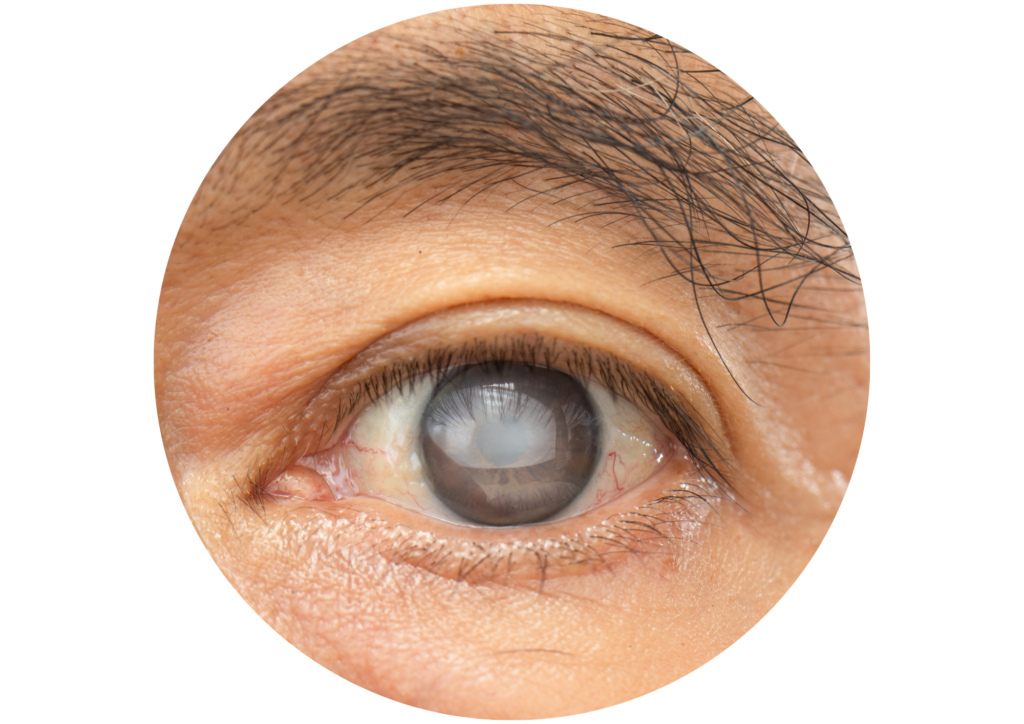
Cataracts develop due to changes in the substance of the lens and its water content. As a result, over time the lens becomes cloudy. Cataracts gradually progress causing symptoms such as: reduced vision, glare or light halos in certain lighting conditions, misty or clouded vision, blurring, double vision, colours not as vibrant and reduced light into the eye. As the cataracts develop the reduced vision can affect the ability to carry out daily activities such as reading text and driving. In severe cases cataract can cause blindness.
As cataracts are normally as a result of ageing, they are more common in older adults. There are other factors that may increase the risk of developing cataracts including: previous eye injury or trauma, previous eye surgery, previous injections into the eye, other eye conditions including glaucoma and diabetes and long-term use of medications such as steroids.
A healthy natural lens has the capacity to change shape, enabling focus on objects near or far, which is known as ‘accommodation’. With age, the lens accommodation changes and many people then need reading glasses to see close items. This may be referred to as Presbyopia and is not cataract.
